
By: Lawrence Harte
In a media landscape once dominated by studios, independent creators are now claiming prime-time real estate. The rapid rise of creator-led productions like MrBeast’s Beast Games and Sidemen’s Inside reflects a fundamental shift: digital-native content and personalities are no longer fringe — they’re mainstream.
Fueled by social media virality, direct fan engagement, and scalable monetization tools, creators are building empires outside of legacy gatekeepers. Now, as broadcasters and distributors seek fresh formats and younger audiences, the creator economy is crossing into traditional television, reshaping how content is funded, produced, and delivered.
The Rise of the Creator-Led Format
The success of Beast Games and Sidemen’s Inside isn’t accidental. These shows have mastered digital storytelling, leveraging YouTube-style energy, direct audience feedback, and episodic virality — then scaling them into TV-ready productions.
Massive Built-In Audiences
Creators like MrBeast and Sidemen command tens of millions of subscribers, dwarfing many cable networks. MrBeast alone has over 260 million YouTube subscribers (2024), giving him more reach than most U.S. broadcast shows combined. Their audience strength ensures instant traction when formats migrate to TV.
Algorithmic Testing Grounds
Unlike traditional pilots, creators test content live through YouTube’s recommendation engine. Every upload is effectively a feedback loop, letting them refine what works and discard what doesn’t. This data-driven evolution means only the best-performing formats get scaled up.
Cost-Efficient Production Models
Creator teams are lean and agile, producing content with cinematic quality at a fraction of Hollywood costs. A single YouTube video can generate viewership rivaling primetime at under 10% of a network episode budget, showcasing an efficiency advantage studios can’t ignore.
Brand Trust and Loyalty
Fans perceive creators as authentic, building deep trust through direct interactions. According to Edelman’s 2023 Trust Barometer, 62% of Gen Z trust influencers more than traditional celebrities. This credibility translates into higher engagement and more impactful branded content.
Traditional Media’s Response: Adapt or Miss Out
Legacy broadcasters and studios are adapting fast. The creator economy is no longer competition — it’s a growth opportunity. Here’s how traditional players are evolving:
Co-Productions and Licensing
Broadcasters now partner directly with creators to bring proven digital hits onto streaming and TV. Netflix’s “Creator Lab” and YouTube Originals showcase this shift, where licensed IP reduces risk by starting with already-engaged audiences.
Creator-Led Studios
Firms like Night Media, Spotter, and Jellysmack act as modern production studios, scaling creator-led content with capital and analytics. Spotter has invested over $1.7 billion in creator catalogs, turning digital talent into long-term business ventures.
Flexible Format Integration
Networks are experimenting with shows that combine livestream elements, creator personalities, and reality TV. This blurring of boundaries makes content more interactive, appealing to younger demographics used to TikTok and Twitch.
Platform Migration
TV platforms like Roku, Pluto, and Samsung TV+ are opening doors to creator-driven FAST channels. For instance, Pluto TV has added multiple creator-led channels, reflecting a FAST industry projected to hit $18 billion in ad revenue by 2028.
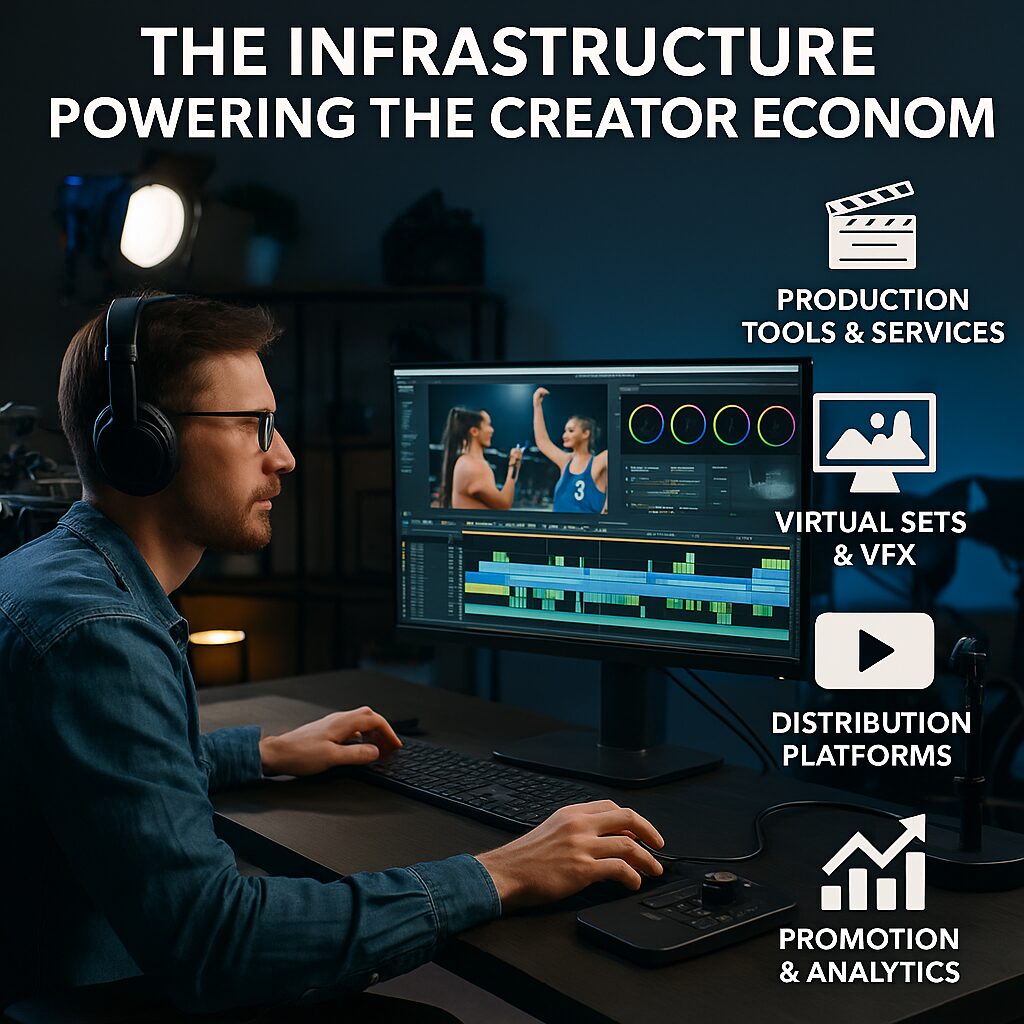
The Infrastructure Powering the Creator Economy
The backbone of this transition isn’t just creators — it’s the tech and service ecosystem enabling them.
Production Tools & Services
Tools like Frame.io, Riverside.fm, and Descript make professional production accessible at scale. These platforms have seen double-digit adoption growth among creators, allowing remote collaboration and near-broadcast quality without Hollywood overhead.
Virtual Sets & VFX
LED walls, Unreal Engine, and cloud-based rendering bring cinematic visuals to creator content. Virtual sets can cut production costs by 30–50%, while enabling creators to deliver visually compelling experiences once reserved for studios.
Distribution Platforms
FAST channels (Pluto, Tubi) and white-label OTT services (Vimeo OTT, Uscreen) expand creator content to living room TVs. According to Variety, FAST viewing surged 20% year-over-year in 2023, offering creators mainstream exposure at scale.
Promotion & Analytics
Agencies like Fanjoy and Viral Nation connect creators with brand sponsors, while tools like Tubular Labs track multi-platform engagement. Analytics empower creators to optimize formats in real time, ensuring maximum audience and advertiser impact.
Monetization Models: More Than Ad Revenue
The creator economy’s financial model isn’t just reliant on views — it’s diversified and robust.
Direct Sponsorships
Brands often fund entire creator-led episodes in exchange for integration. A 2023 survey found 74% of marketers plan to increase influencer spend, showing brand dollars continue to migrate from TV commercials to creator partnerships.
Merchandise & Licensing
Sidemen’s food and clothing lines or MrBeast’s Feastables are examples of creators extending into consumer goods. Feastables generated $10 million in sales in its first year, proving fans readily support creator-branded products.
Subscription Content
Platforms like Patreon, Kajabi, and YouTube Memberships monetize superfans willing to pay for exclusives. Patreon alone surpassed $3.5 billion in total creator payouts by 2023, showing the strength of fan-funded models.
Syndication & Licensing
Networks are increasingly licensing creator content for broadcast or repackaging. This adds new revenue streams while giving TV fresh, relevant programming — a model that keeps creators in control of their IP.
NFTs and Tokenized Experiences
Though still niche, NFTs and Web3 models let fans buy ownership-like experiences. In 2022, creators collectively earned over $1.1 billion from NFT sales, illustrating how tokenized engagement can become a premium revenue stream.
The Future: Creator Economy as Mainstream Media
As creators become showrunners, brand builders, and media CEOs, the gap between “digital influencer” and “TV producer” has essentially closed. The next phase points toward:
Creator-Owned Networks
Imagine MrBeast launching a 24/7 digital channel spanning livestreams, competitions, and exclusive drops. This is no longer far-fetched, as 24/7 creator FAST channels already exist and continue to grow rapidly.
AI-Powered Personalization
Content may soon adapt to individual viewers, with episodes tailored by AI to past engagement. According to Deloitte, 62% of Gen Z expect personalized content feeds, making this a powerful engagement driver.
Talent Pipelines via Creator Academies
Companies will formalize training for the next generation of creators, much like studios once did for actors. Programs like YouTube’s Creator Academy already serve millions worldwide, signaling the institutionalization of creator development.

About Lawrence Harte
Lawrence Harte is CEO of DiscoverNet and publisher & editor of OTT Business Magazine, Host of OTT Business Podcast, Producer of the TV Metaverse Show. He is the author of 151+ Media, Technology & Business books.